

Neuauflage wegen der großen Nachfrage:
Vorlesung im Wintersemester 2025/26 ...
Dieter Meschede, Institut für Angewandte Physik, Universität Bonn
… für Großeltern? Vielleicht wollen Sie ja Ihren Enkeln oder
Freunden erklären können, wieso ein Flugzeug fliegen kann.
Wie sich die Planeten bewegen und was Exoplaneten sind.
Wie ein Laser funktioniert und was er kann. Was es mit der
Quantenwelt auf sich hat. Wie die Instrumente die Töne
erzeugen. Sie sind sich aber nicht sicher, was Sie erzählen
sollen …
Falls Sie Freude daran haben, solchen und andere Fragen des Alltags oder auch der reinen Neugier an der Physik nachzugehen, dann schließen Sie sich doch dieser Vorlesung an:
· 10 Vorlesungen im Wintersemester 2025/26 (Vorschauinfo .pdf)
· Jeweils 1,5 Stunden, mit viel Gespräch und Diskussion
· Beginn: Do, 23.10.2025, 17:15 – 18:45, 53115 Bonn Poppelsdorf
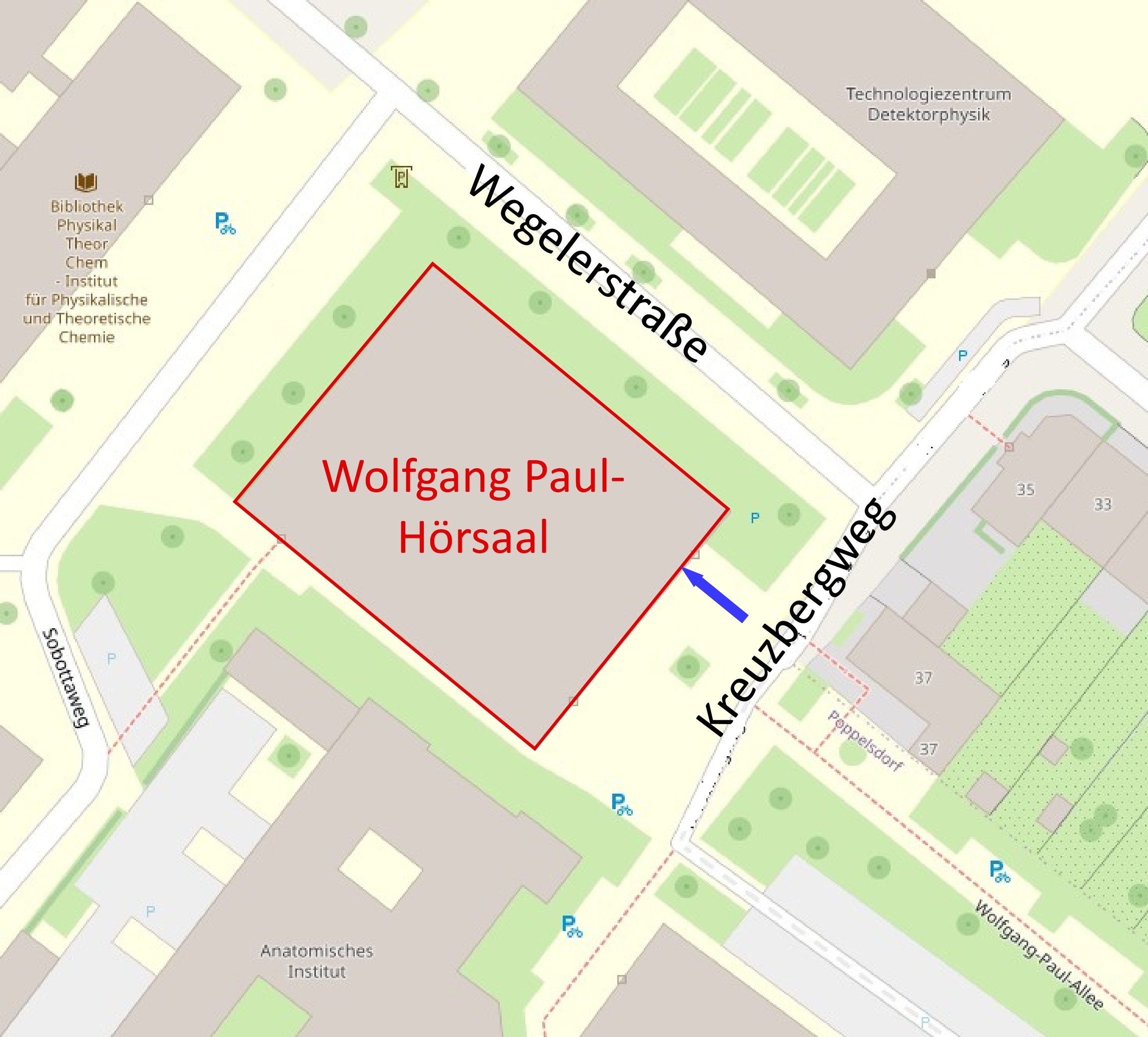
· Ort: Wolfgang Paul-Hörsaal, Kreuzbergweg 28
· Alternativ Livestream per Zoom: Link bei Diese E-Mail-Adresse ist gegen Spambots geschützt! JavaScript muss aktiviert werden, damit sie angezeigt werden kann. erfragen
· Teilnahmevoraussetzungen: keine
· Bei Anmeldung (
Diese E-Mail-Adresse ist gegen Spambots geschützt! JavaScript muss aktiviert werden, damit sie angezeigt werden kann.
) werden Sie in den
eMail-Verteiler aufgenommen
** Hier geht es zu den Materialien WS 2025/26 (geschützt)
** Hier geht es zum Archiv der Vorlesung 2024/25 (geschützt)
** Hier geht es zum Archiv der Vorlesung 2023/24 (geschützt)
** Hier geht es zum Archiv der Vorlesung 2022/23 (geschützt)
** Hier geht es zu Ihren P4G Fragen und Antworten (F/A) (im Aufbau)
Für die Anmeldung, klicken Sie auf diesen Link.
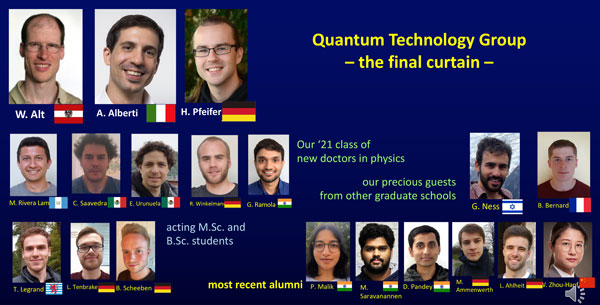 Dieter Meschede hält ein Online-Seminar am
  Zu wissen, wie schnell ein Quantenprozess sein kann, offenbart die ultimativen Grenzen der Informationsverarbeitung. Das Brachistochronen-Problem für zweistufige Quantensysteme - der schnellste Weg zwischen zwei Quantenzuständen - ist schon lange bekannt. Diese Lösungen sind jedoch im Allgemeinen nicht auf größere Quantensysteme anwendbar. In